Improving Survival of Preterm Infants in Sub-Saharan Africa
A multi-country neonatal research initiative evaluating standardized respiratory care bundles to reduce preventable mortality among preterm infants across four African countries.
4
Countries
8
Referral Hospitals
1,500+
Target Enrollment
Hybrid
Design
About the Preterm Africa Study
Study Overview
The Preterm Africa Study is a multi-country neonatal research initiative designed to improve survival outcomes for preterm and low birth weight infants in Sub-Saharan Africa. The study was developed in response to persistently high neonatal mortality rates in the region, where complications of prematurity remain one of the leading causes of death in the first month of life. Although many life-saving treatments for premature infants are well established globally, their consistent and structured implementation in resource-limited hospital settings remains a major challenge.
By working across multiple tertiary referral hospitals in four African countries, the study evaluates how standardized respiratory care interventions can be delivered effectively within real-world clinical environments. The goal is not only to strengthen the use of proven therapies such as bubble CPAP, caffeine citrate, and less invasive surfactant administration, but also to ensure that these interventions are implemented in a coordinated, sustainable, and scalable manner. Through this approach, the Preterm Africa Study aims to reduce preventable neonatal deaths and strengthen respiratory care systems for the most vulnerable newborns.
Why This Study Is Needed
| Global Progress | Under-five mortality has declined substantially |
| Remaining Gap | Neonatal mortality decline has been slower |
| Regional Burden | Sub-Saharan Africa bears a disproportionate share of neonatal deaths |
| Major Causes | Respiratory Distress Syndrome (RDS), apnea of prematurity, respiratory complications |
| Implementation Challenge | Evidence-based therapies exist but are inconsistently implemented |
What the Study Evaluates
- Standardized respiratory care bundle
- Real-world hospital implementation
- Clinical outcomes at scale
- Sustainability of structured neonatal systems
Core Intervention Bundle
| Intervention | Purpose |
|---|---|
| Bubble CPAP (bCPAP) | Provides non-invasive respiratory support and prevents alveolar collapse |
| Caffeine Citrate | Treats apnea of prematurity and improves respiratory drive |
| LISA | Delivers surfactant during CPAP support to reduce ventilator need |
Study Design
- Hybrid effectiveness–implementation design
- Embedded within high-volume tertiary hospitals
- Simultaneous evaluation of:
- Clinical outcomes
- Implementation processes
- Protocol standardization
- Quality improvement systems
Study Phases
| Phase | Focus |
|---|---|
| Phase One | Standardization of CPAP and caffeine therapy, strengthening monitoring systems, harmonizing respiratory protocols, routine screening for IVH and ROP. |
| Phase Two | Introduction of LISA using a stepped-wedge cluster implementation model with continuous outcome monitoring. |
Safety & Ethics
- Ethical review and approval in participating countries
- Informed consent from parents or guardians
- Predefined adverse event monitoring
- Independent oversight mechanisms
- Infant welfare prioritized throughout
Capacity Strengthening
- Training for physicians and nurses
- Standardized respiratory protocols
- Strengthened data systems
- Improved oxygen blending and monitoring practices
- Long-term sustainability beyond study duration
Global Contribution
- Generates high-quality data from African settings
- Addresses contextual differences in neonatal care systems
- Supports regional and global neonatal policy development
- Provides a scalable model for structured respiratory care
Core Intervention Bundle
Vayu Bubble CPAP
Standardized continuous positive airway pressure system with controlled oxygen blending designed for low-resource environments.
Caffeine Citrate
Evidence-based pharmacologic therapy to treat apnea of prematurity and enhance respiratory stability.
LISA
Less Invasive Surfactant Administration delivered while maintaining CPAP support to reduce ventilator need.
Participating Countries and Study Sites
🇰🇪 Kenya
Mama Lucy Kibaki Hospital (Nairobi)
Coast General Teaching & Referral Hospital (Mombasa)
🇬🇭 Ghana
Korle-Bu Teaching Hospital
Komfo Anokye Teaching Hospital
Tamale Teaching Hospital
🇳🇬 Nigeria
Federal Teaching Hospital Ido-Ekiti
University of Ilorin Teaching Hospital
🇨🇫 Central African Republic
Community Hospital Centre – Bangui
Study Leadership
Global Principal Investigator
Dr. Osayame Ekhaguere
Indiana University School of Medicine
Co-Principal Investigator
Prof. Helen Nabwera
Aga Khan University
Kenya Site Co-Investigator
Dr. Justus M. Simba
Mama Lucy Kibaki Hospital (Nairobi)
Kenya Site Co-Investigator
Dr. Nayirat Mohamed
Coast General Teaching & Referral Hospital (Mombasa)
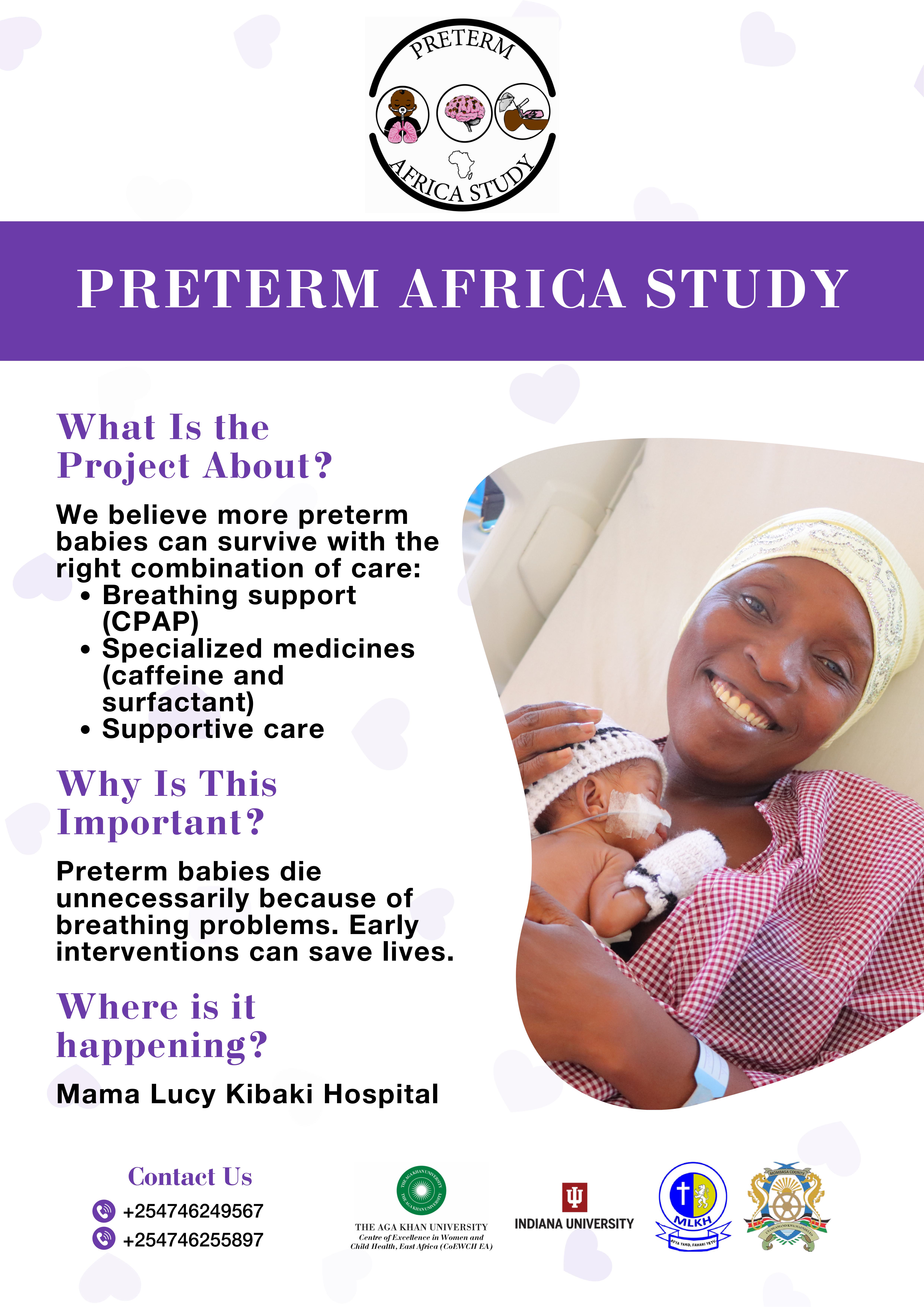
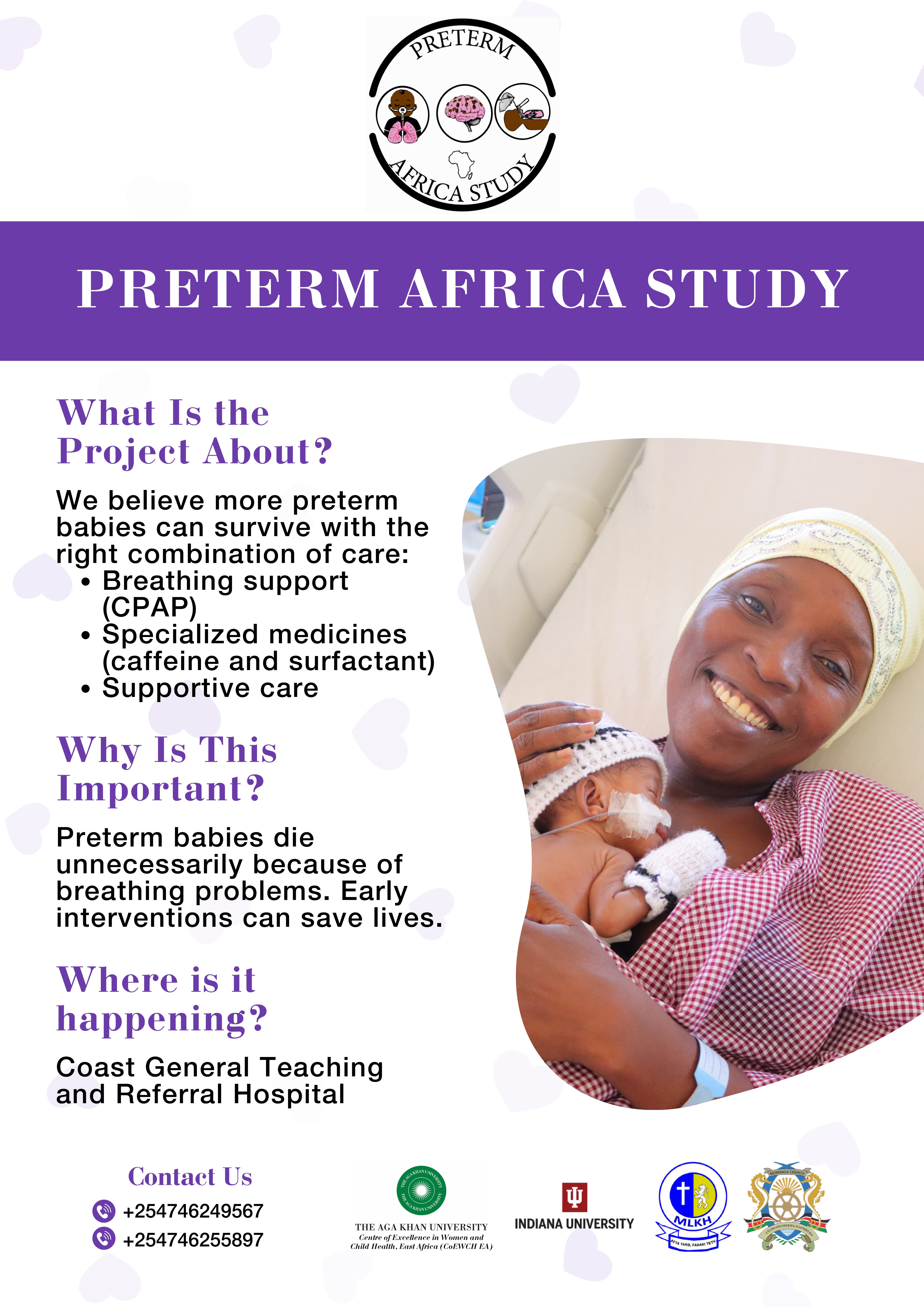
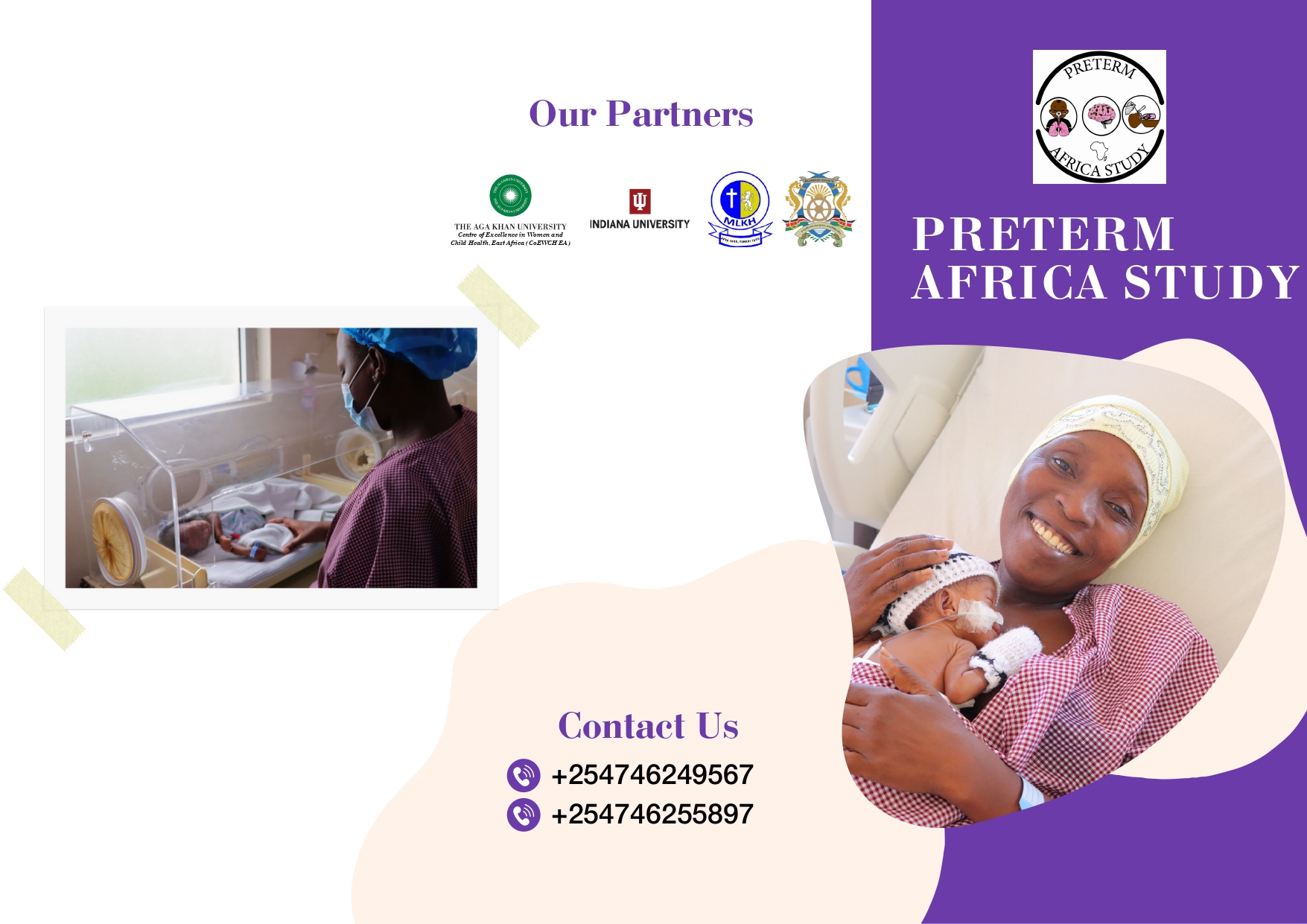
Study Flyers